
Ottoman jewelry is one of the most refined and sophisticated expressions of the art and culture of this ancient empire. Its designs, colors, and materials reflect the wealth, power, and diversity of a civilization that spanned three continents for more than six centuries.
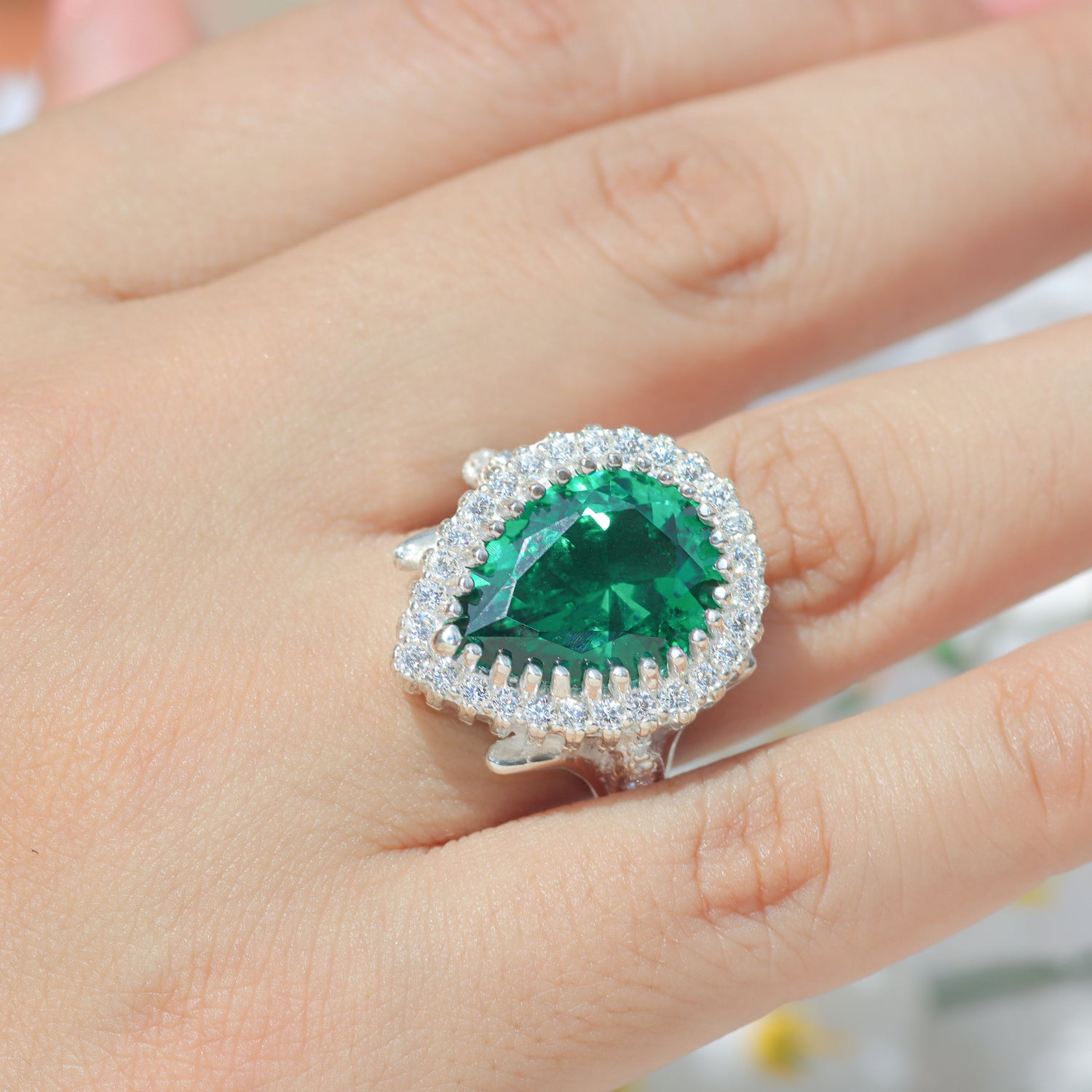
Among the most emblematic and fascinating pieces of Ottoman jewelry is the ring of Sultana Hurrem, a jewel that holds a story of love, intrigue and legend.

Ottoman Jewelry: A Testament to Elegance and Creativity
Ottoman jewelry is characterized by its distinctive style and meticulous attention to detail. Ottoman artisans used a variety of precious materials, such as gold, silver, gemstones, and pearls, to create pieces that exuded luxury and sophistication.
The designs were often intricate, incorporating geometric elements, floral motifs, and organic shapes inspired by nature.
The Ring of Sultana Hurrem: A Royal Jewel
Hurrem Sultan's ring is one of the finest examples of Ottoman jewelry. Hurrem Sultan, also known as Roxelana, was the principal wife of the Ottoman Sultan Suleiman the Magnificent in the 16th century. This ring has become a symbol of her beauty and influence at the Ottoman court.
Sultana Hurrem's ring is crafted in gold and features a unique flower-shaped design with a large emerald at its center, surrounded by diamonds. Its design reflects nature and beauty, and the choice of precious gemstones enhances its splendor.
Besides its aesthetic value, the ring also has a deep historical significance, as it symbolizes the love between Hurrem Sultan and Suleiman the Magnificent.
The Enduring Legacy of Ottoman Jewelry
Although the Ottoman Empire came to an end in the 20th century, its legacy lives on through the beauty and craftsmanship of Ottoman jewelry. Pieces like Hurrem Sultan's ring are still admired and cherished today, and continue to inspire jewelry designers worldwide.
The Ottoman Empire and its Jewelry
The Ottoman Empire was one of the largest and longest-lasting empires in history, spanning from the 13th to the 20th century. Its territory stretched from southeastern Europe to North Africa and the Middle East, and its population included people of diverse ethnicities, religions, and cultures.
The empire reached its peak in the 16th century, under the reign of Suleiman the Magnificent, considered the greatest of the Ottoman sultans.
Ottoman jewelry reflects the grandeur and diversity of this empire, as well as its influence from other civilizations, such as the Byzantine, Persian, Mongol, and Arab. Ottoman jewelry is characterized by the use of precious metals, such as gold and silver, and precious and semi-precious stones, such as rubies, sapphires, emeralds, diamonds, coral, pearls, and turquoise.
Ottoman jewelry designs are varied and intricate, incorporating geometric, floral, animal, and calligraphic motifs. Ottoman jewelry is also distinguished by its symbolism and meaning, as each piece carries a specific message or function.
Ottoman jewelry was worn by both men and women, and served different purposes depending on gender, social class, and the occasion. Men wore jewelry as a sign of rank and authority, and as amulets for protection and good luck. Women wore jewelry as adornments of beauty and elegance, and as expressions of identity and feelings.
Ottoman jewelry was also given as a token of affection, respect, and loyalty, and was inherited as part of family tradition.
Sultana Hurrem and her Ring
Among the women who wore Ottoman jewelry with the most distinction and glamour was Sultana Hurrem, the favorite wife of Suleiman the Magnificent and one of the most influential and controversial figures in Ottoman history.
Sultana Hurrem, whose name means "the joyful one", was born as Roxelana, a slave of Ukrainian origin who was captured by the Tatars and sold to the sultan's harem.
There, she captivated the sultan with her beauty, intelligence, and personality, becoming his concubine and later his legal wife, breaking with the Ottoman tradition that forbade sultans from marrying their slaves.
Sultana Hurrem was the first wife of the sultan who had political and social influence in the empire, and who actively participated in state affairs.
She was also the mother of six of the sultan's children, including the heir Selim II, and the founder of several charitable and architectural works.
Sultana Hurrem was admired for her beauty, her culture, and her charisma, but she was also feared and hated by her enemies, who accused her of being an intriguer, a manipulator, and a witch.
Sultana Hurrem had a great passion for jewelry, and possessed an impressive collection of gold, silver, and precious stone pieces.
Among her favorite jewels was the ring given to her by Sultan Suleiman, which became a symbol of his love and power. Sultana Hurrem's ring is a unique and exceptional jewel, combining elegance and the history of Ottoman jewelry.
https://youtu.be/vygjRdOTxkI?si=RZWfU5Bp6OC9LEZj
The Design and Meaning of Sultana Hurrem's Ring
Sultana Hurrem's ring is a 22-karat gold ring, oval in shape and of considerable size. The ring is adorned with five precious stones of different colors and shapes, forming a harmonious and striking design. The stones are as follows:
- A central oval-shaped ruby, intense and bright red in color, representing love, passion and courage.
- Two rectangular-shaped emeralds on the sides, light green and radiant, representing hope, faith and fertility.
- Two extreme triangular-shaped diamonds, white and transparent, representing purity, wisdom, and eternity.
Sultana Hurrem's ring also has a hidden and mysterious meaning, related to magic and astrology. According to some sources, the ring is inscribed with the Arabic words "Ma sha' Allah," which means "God wills" or "God has willed it."
These words are an expression of gratitude and acceptance of divine will, and also a form of protection against the evil eye and envy.
Furthermore, the ring has symbols engraved on its exterior that correspond to the planets and the signs of the zodiac, indicating the birth dates of Sultana Hurrem and her husband, Sultan Suleiman. These symbols are as follows:
- The sun, which represents Sultan Suleiman, born on November 6, 1494, under the sign of Scorpio.
- The moon, which represents Sultana Hurrem, born on April 4, 1502, under the sign of Aries.
- Mercury, which represents intelligence, communication, and commerce.
- Venus, who represents love, beauty, and art.
- Mars, which represents war, courage, and action.
- Jupiter, which represents justice, generosity, and expansion.
- Saturn, which represents time, discipline, and responsibility.
The ring of Sultana Hurrem is a jewel that reflects the personality, history, and destiny of this extraordinary woman, who was the wife, advisor, and confidante of the greatest of the Ottoman sultans.
The ring of Sultana Hurrem is a jewel that symbolizes the love, power and magic of a golden age, which still fascinates and inspires us today.


Leave a comment
All comments are moderated before being published.
This site is protected by hCaptcha and the hCaptcha Privacy Policy and Terms of Service apply.